Entry ID: GB-0053
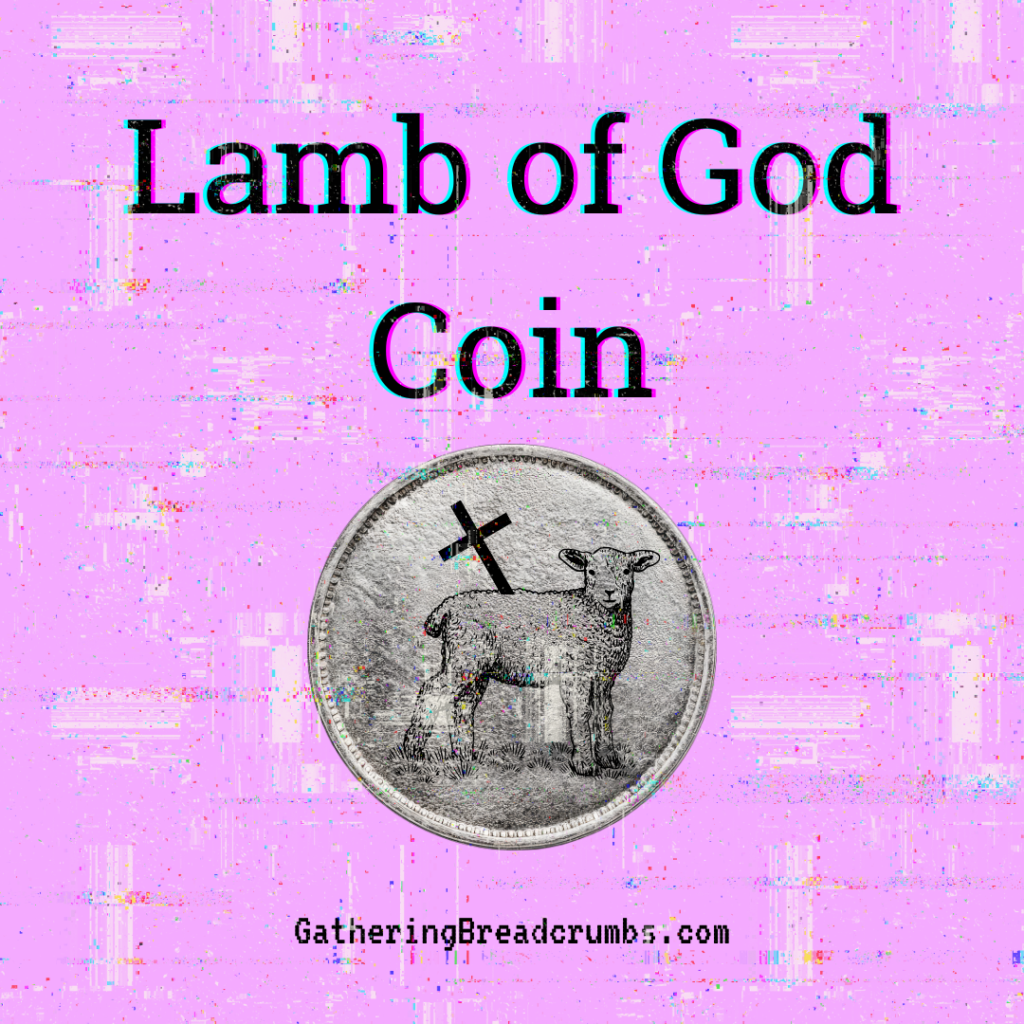
Title: Lamb of God Coin
Alternate Names / Local Labels: Agnus Dei Coin · Lamb of God Penny · Penitential Penny
Location: Anglo-Saxon England; later recovered primarily in Scandinavia and the Baltic regions
Date(s) of Activity: Minted circa 1009 CE during the reign of Aethelred II
Archive Category: Animals, Objects, Places, and Plants
Status: Verified Historical Artifact / Religious Object / Folkloric Symbol
CONTENT NOTICE
This entry discusses religious fear, national crisis, and historical warfare. No graphic content is present.
SUMMARY
The Lamb of God Coin, also known as the Agnus Dei penny, was a rare form of English coinage commissioned by King Aethelred II in response to devastating Viking raids in the early 11th century. These coins were intended not merely as currency, but as penitential objects…physical manifestations of national repentance meant to invoke divine protection.
Unlike standard English pennies of the period, which commonly featured royal imagery, Lamb of God coins bore explicitly Christian symbolism: a sacrificial lamb pierced by a cross on one side and a dove representing the Holy Spirit on the other. They were distributed as part of a larger campaign of fasting, almsgiving, and public penance intended to shield England from invasion.
Their intended spiritual purpose, however, failed spectacularly. Viking raiders not only continued their invasions but often repurposed these sacred objects as jewelry, puncturing them for adornment. In this transformation, the coins became paradoxical artifacts: symbols of fear, failed protection, and cultural absorption.
Today, only around thirty examples are known to survive, rendering them exceptionally rare material witnesses to a moment when faith, politics, and desperation collided.
VERIFIED FACTS
● Lamb of God coins were minted under King Aethelred II around 1009 CE.
● The coinage was part of a broader religious response to Viking invasions.
● Subjects were instructed to fast, give alms, attend church barefoot, and carry these coins as acts of contrition.
● The coins feature a lamb pierced by a cross and a dove symbolizing the Holy Spirit.
● Unlike conventional coinage, these pennies omitted the king’s portrait in favor of purely religious imagery.
● Many surviving examples have been found in Viking-associated regions such as Denmark, Scandinavia, and the Baltics.
● Vikings frequently modified the coins into wearable ornaments.
● Only a small number of these coins survive today, making them exceptionally rare.
OPERATIONAL CONTEXT
The Lamb of God Coin exists at the intersection of:
● Religious ritual
● Political crisis management
● Material culture
● National fear response
● Symbolic protection practices
Aethelred II interpreted Viking invasions as divine punishment for England’s sins, prompting a state-sanctioned penitential campaign. This reveals how rulers historically weaponized spiritual obedience during periods of political instability.
Rather than military innovation, Aethelred sought supernatural intervention through ritualized repentance.
This strategy proved ineffective militarily, yet it created one of the most symbolically potent numismatic artifacts of the medieval world. The coins functioned less as defense and more as a public theology of fear.
ANOMALOUS NOTES
Several paradoxes define the Lamb of God Coin:
● Intended as divine protection, yet failed to prevent invasion
● Designed to repel Vikings, yet became prized by Viking raiders
● Created as a sacred object, yet transformed into secular adornment
● Symbolized national repentance, yet survives largely outside England
This inversion transforms the object from mere currency into a cautionary artifact regarding symbolic power and the limits of performative faith under material threat.
Curator Gitte Tarnow Ingvardson f the National Museum of Denmark described the irony as “almost tragicomical,” underscoring the extraordinary reversal of intent.
HUMAN FACTOR
● King Aethelred II (“The Unready”)
● Anglo-Saxon Christian clergy
● English citizens participating in acts of penance
● Viking raiders under Thorkell the Tall
● Modern archaeologists and museum curators
The coin reflects how ordinary citizens were enlisted into state religious performance during the existential crisis.
CULTURAL / MATERIAL ARTIFACTS
● Surviving Agnus Dei pennies
● Archaeological finds in Denmark and Baltic regions
● Religious iconography in numismatics
● Viking jewelry adaptations
● Historical chronicles regarding Aethelred’s penitential policies
The coin also persists in modern Christian devotional contexts, where Agnus Dei tokens remain in circulation as faith symbols, though disconnected from their original political purpose.
THE OBJECT CLAIM
As both artifact and symbol, the Lamb of God Coin may be interpreted through multiple frameworks:
Religious Framework:
● A penitential object intended to secure divine intervention
Political Framework:
● A state tool reinforcing obedience during invasion
Folkloric Framework:
● A failed protective talisman transformed by enemy appropriation
Material Culture Framework:
● A rare example of symbolic currency whose meaning was radically altered by cultural exchange
FIELD IDENTIFICATION NOTES
Authentic historical Lamb of God coins generally feature:
● Lamb pierced by cross imagery
● Dove symbolism
● Anglo-Saxon silver penny dimensions
● Evidence of piercing for suspension in Viking contexts
● Early 11th-century minting markers
Objects bearing these traits should be examined for numismatic authenticity and archaeological provenance.
CROSS-REFERENCES
● Haint Blue (GB-0011): protective symbolism through material means
ARCHIVAL INTERPRETATION
The Lamb of God Coin serves as an extraordinary example of how objects acquire layered meanings through fear, faith, and historical irony.
Originally conceived as an act of collective spiritual defense, the coin instead became evidence of vulnerability and the failure of symbolic systems against material violence.
Its survival, largely through the hands of those it was meant to repel, transforms it into a relic of paradox:
A prayer worn by its enemy.
A national plea reduced to ornament.
A sacred symbol absorbed into the very force it sought to resist.
For Gathering Breadcrumbs, the Lamb of God Coin exemplifies how folklore, religion, and material culture intertwine…where even failure may leave behind powerful artifacts that continue to shape memory.
BIBLIOGRAPHY / SOURCE NOTES
● Bennett, Jonathan. “Lamb of God Coins from English King Found in Denmark.” The Viking Herald, 29 Apr. 2026.
● Radley, Dario. “1,000-Year-Old English Coins Created against Viking Raids Found in Denmark.” Archaeology News Online Magazine, 10 May 2026.
● Solly, Meilan. “An English King Minted These Coins to Ward off a Viking Invasion. Instead, the Seafaring Raiders Turned the Pennies into Jewelry.” Smithsonian Magazine, 12 May 2026.
BREADCRUMBS
The archive invites further exploration into the following:
● How often were religious artifacts repurposed by invading cultures?
● Did English citizens genuinely believe these coins offered divine protection?
● Were similar ritual coinages produced elsewhere during national crises?
● How does material irony alter the symbolic legacy of sacred objects?
● Could these coins be viewed as an early form of protective amulet?
● What does their distribution reveal about medieval responses to collective fear?
Readers, researchers, and archivists are encouraged to contribute regional findings, numismatic analysis, or comparative ritual artifacts.
Archival Status: Filed
Last Updated: 05/13/2026
Archivist Initials: EH