Entry ID: GB-0010
Title: Tailypo
Alternate Names / Local Labels: Tailypo Creature · Tailypo Cat · Knob-Tail Beast
Location: Appalachian Mountains (primary attribution); Ozark Mountains, Arkansas (variant account)
Date(s) of Activity: Undetermined; orally transmitted since at least the 19th century
Archive Category: Animals, Objects, Places, & Plants
Status: Folklore with Persistent Narrative Consistency
CONTENT NOTICE
This entry references starvation, implied violence toward animals, and predatory behavior directed at humans.
SUMMARY
The Tailypo is a folkloric entity most commonly associated with the Appalachian region, though variants of the story appear throughout rural, forested areas of the United States.
Accounts consistently describe an isolated individual—typically an elderly man living alone in deep woodland—encountering an unknown creature that enters his home during a period of scarcity.
The creature is described as large and animalistic, with features resembling a hybrid of bear and opossum: long claws, sharp teeth, and a distinctive long, hairless tail.
In the encounter, the man severs the creature’s tail—often unintentionally—and consumes it, either knowingly or out of desperation.
Following this act, the creature returns repeatedly, vocalizing a singular demand:
“Tailypo… tailypo… all I wants my tailypo…”
Over successive nights, the entity escalates its behavior:
- Scratching at the cabin
- Luring the man outside
- Removing his hunting dogs one by one
- Ultimately entering the home itself
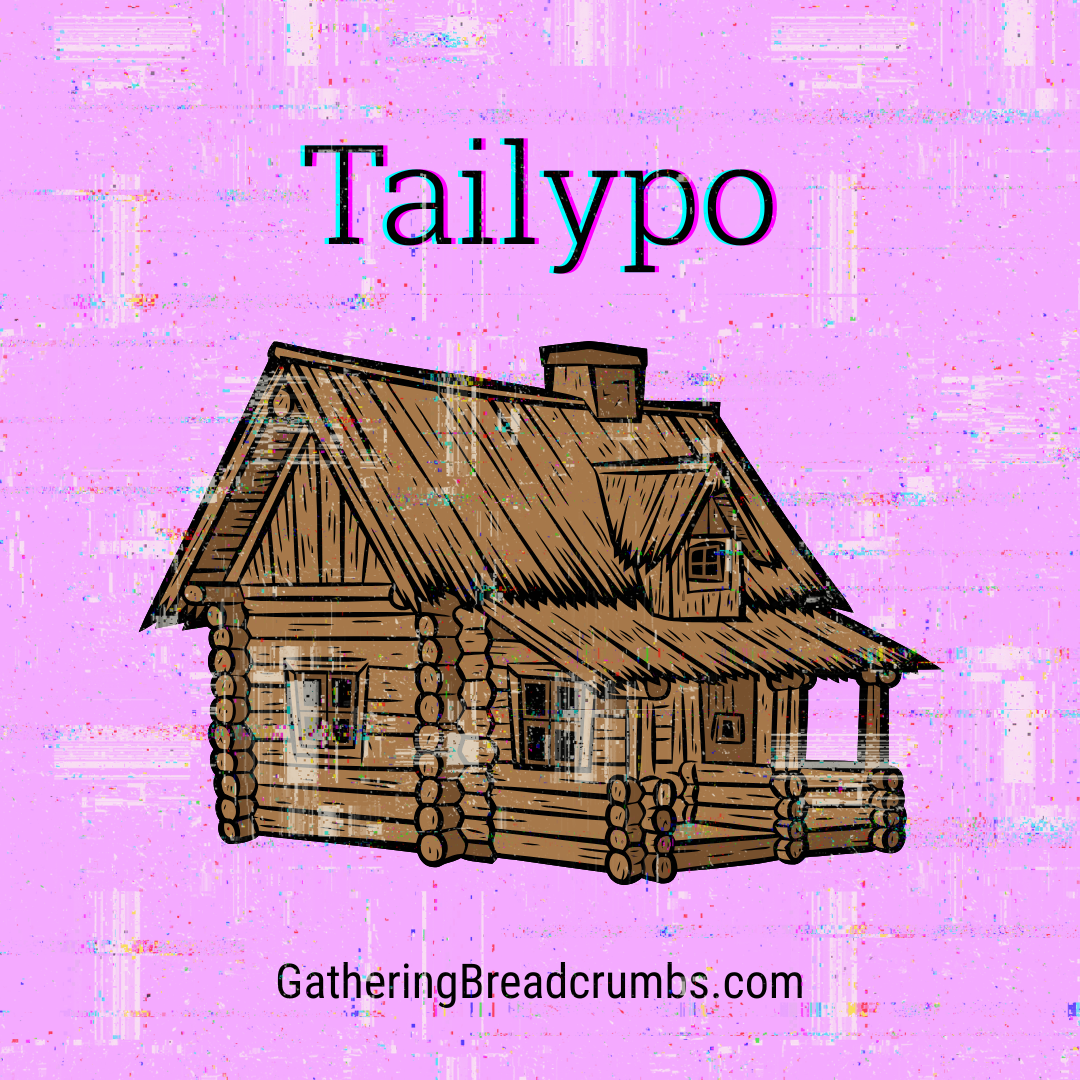
The story concludes with the disappearance of the man, his animals, and often the structure itself. When others arrive later, only remnants remain—most notably a chimney described as resembling a “knobby tail.”
VERIFIED FACTS
Unlike Polybius, Tailypo does not appear to originate from a convergence of documented historical events.
However, several grounded elements contribute to its persistence:
- The tale is deeply rooted in Appalachian oral storytelling traditions
- It was widely recorded in 19th and early 20th century folklore collections
- Variants exist across multiple regions, particularly in economically impoverished, forested communities
- The structure of the narrative remains remarkably consistent despite geographic variation
The story’s endurance suggests strong cultural transmission rather than a singular origin point.
OPERATIONAL CONTEXT
Tailypo emerges from an environment defined by:
- Isolation in remote wilderness
- Food scarcity and subsistence hunting
- Limited access to external aid
- Strong oral storytelling traditions
Within this context, the narrative reflects several recurring anxieties:
- The consequences of taking more than one is entitled to
- The danger of the unknown within familiar spaces
- The vulnerability of those living beyond communal protection
- The idea that the wilderness itself may remember and reclaim
Unlike many predator tales, the Tailypo is not encountered accidentally—it is wronged, and then it returns.
ANOMALOUS NOTES
Several elements of the Tailypo narrative resist easy classification:
- The creature demonstrates persistence and apparent memory of injury
- Its vocalization suggests mimicry or rudimentary language use
- It exhibits targeted retaliation rather than indiscriminate predation
- The progressive removal of the man’s dogs implies strategic behavior
- The final disappearance of both victim and structure is inconsistent with known animal attacks
Additionally, the repeated phrasing—“all I wants my tailypo”—is reported with striking uniformity across accounts, suggesting either strong narrative preservation… or something more deliberate.
HUMAN FACTOR
Individuals involved in the transmission of the Tailypo narrative include:
- Appalachian and Ozark storytellers
- Folklorists documenting regional tales
- Rural communities using oral cautionary stories
- Modern collectors and archivists
Reactions to the story tend to fall into familiar categories:
- Dismissal as a campfire tale
- Recognition as a moral fable
- Unease at its tonal shift from survival story to inevitability
- Occasional belief in the creature as a cryptid.
CULTURAL / MATERIAL ARTIFACTS
The Tailypo has appeared in:
Literature & Folklore Collections
- Regional Appalachian story compilations
- Children’s “scary stories” anthologies
Education
- Frequently taught as an example of American oral tradition
- Used to illustrate narrative repetition and escalation in folklore
Modern Media
- Podcast retellings (Old Gods of Appalachia)
- Animated and illustrated adaptations
- Horror reinterpretations emphasizing the creature’s revenge
Despite this, it has not achieved the same mainstream recognition as other American cryptids, remaining… quietly persistent.
THE CREATURE CLAIM
(Operational Claim Variant: The Entity)
If the Tailypo exists beyond narrative, reported characteristics include:
- Large, quadrupedal mammalian form
- Opossum-like facial structure
- Long, hairless tail (primary defining feature)
- Clawed forelimbs capable of climbing and grasping
- Vocal mimicry approximating human speech
- Persistent tracking behavior toward a specific individual
Behavioral traits:
- Returns repeatedly to a fixed location
- Escalates interaction over time
- Demonstrates fixation on a lost body part
- Removes obstacles (e.g., animals) methodically
No verified specimen or remains have been recovered.
CROSS-REFERENCES
- TBD
ARCHIVAL INTERPRETATION
Tailypo functions as both warning and inevitability.
On the surface, it is a simple tale: a man takes what is not his, and something comes to reclaim it.
But the structure suggests something more insidious. The creature does not strike immediately. It returns. It waits. It erodes safety piece by piece until nothing remains.
There is no escape written into the story. Only delay.
In this sense, Tailypo aligns less with predator folklore and more with narratives of consequence made manifest—a force that cannot be outrun, only invited.
Whether understood as morality tale, psychological projection, or something that moves just beyond the edge of the firelight…
…it endures because it feels patient.
BIBLIOGRAPHY / SOURCE NOTES
Primary narrative adapted from regional oral tradition accounts and compiled field notes.
Comparative structure and archival formatting informed by Polybius entry.
BREADCRUMBS
The archive invites further investigation into the following questions:
- Why does the creature’s speech remain consistent across geographically separate tellings?
- Is the removal of the tail symbolic, or is it treated as materially significant within the narrative?
- Why does the escalation follow a predictable pattern of depletion (dogs → safety → self)?
- Are there any accounts in which the victim survives after taking the tail?
- Could the Tailypo represent a broader category of “reclamation entities” within American folklore?
Archival Status: Filed
Last Updated: 03/19/2026
Archivist Initials: EH