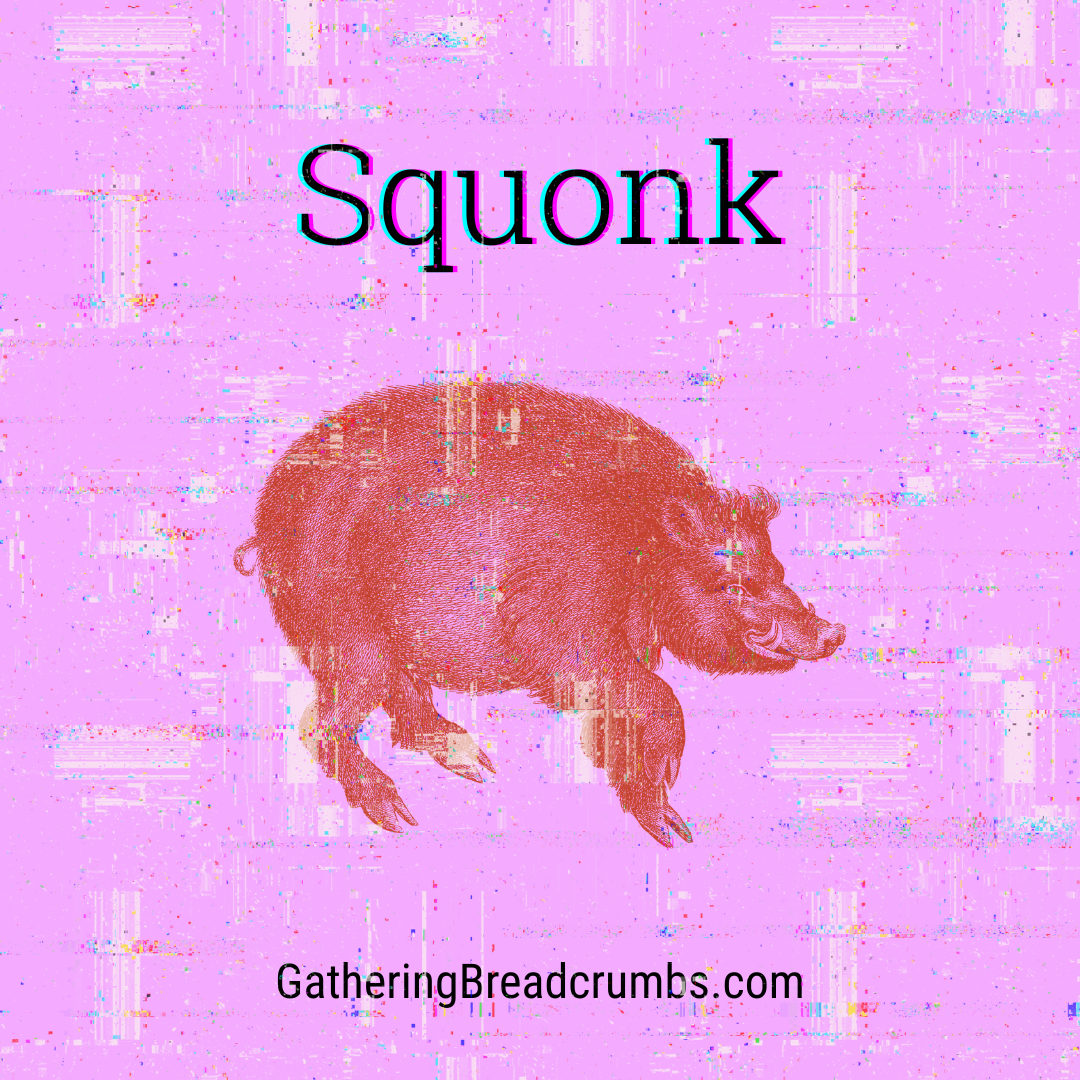
Entry ID: GB-0007
Title: Squonk
Alternate Names / Local Labels: None widely recorded
Location: Hemlock forests of Pennsylvania, United States
Date(s) of Activity: First recorded in 1910 (folkloric origin uncertain)
Archive Category: Cryptids & Spirits
Status: Folklore / Likely Misidentification
CONTENT NOTICE
This entry references animal suffering and disease. Descriptions are non-graphic.
SUMMARY
The squonk is a reclusive folkloric creature said to inhabit the hemlock forests of Pennsylvania. It is described as a profoundly unhappy animal, ashamed of its own appearance, and prone to constant weeping.
The creature first appears in written record in Fearsome Creatures of the Lumberwoods (1910) by William T. Cox, a text that blends folklore, exaggeration, and invention. No verified sightings exist outside of this literary origin.
The squonk is most famously associated with its alleged defensive behavior: when cornered or captured, it dissolves entirely into a puddle of tears.
Modern interpretations suggest that the squonk legend may have originated from sightings of animals (particularly feral pigs) suffering from severe sarcoptic mange, a condition that causes hair loss, skin thickening, and visible distress.
VERIFIED FACTS
The squonk was first documented in 1910 by William T. Cox.
· No confirmed sightings exist outside of folkloric or literary sources.
· The creature is associated specifically with Pennsylvania’s hemlock forests.
· Mange (caused by Sarcoptes scabiei) can produce severe physical distortion and visible suffering in mammals.
· Animals in distress, including pigs, are capable of producing tear-like secretions.
OPERATIONAL CONTEXT
The squonk occupies a liminal space between folklore, satire, and misidentification.
Several contributing factors explain its persistence:
· Literary origin: Unlike many cryptids, the squonk originates from a known written source rather than oral tradition.
· Environmental plausibility: The dense, shadowed hemlock forests provide an evocative and believable habitat.
· Disease distortion: Mange and similar conditions can render familiar animals nearly unrecognizable.
· Emotional projection: The squonk’s defining trait (shame over its appearance) suggests a deeply human element imposed onto the natural world.
· Cultural resonance: The idea of a creature that dissolves under observation aligns with themes of vulnerability, avoidance, and self-perception.
ANOMALOUS NOTES
No physical remains, tracks, or biological evidence have ever been attributed to the squonk.
· The creature’s defining behavior (dissolving into tears) has no known biological analogue.
· The asymmetrical webbing described in early accounts (only on submerged left feet) suggests exaggeration or fabrication.
· The squonk’s emotional state is described with unusual specificity, indicating anthropomorphic storytelling.
HUMAN FACTOR
· Lumber workers and early 20th-century folklorists
· Readers of Cox’s work and subsequent retellings
· Cryptozoology enthusiasts
· Artists and craftspeople (notably creators of “squonk” plush representations)
Reactions tend toward amusement, sympathy, and identification rather than fear.
CULTURAL / MATERIAL ARTIFACTS
· William T. Cox’s Fearsome Creatures of the Lumberwoods (1910)
· Modern illustrations and reinterpretations
· Plush representations emphasizing exaggerated wrinkles and melancholy expression
· Inclusion in American folkloric bestiaries
FIELD IDENTIFICATION NOTES
If the animal observed has:
– uneven or patchy hair loss
– thickened, wrinkled, or inflamed skin
– signs of malnutrition or distress
– behavior consistent with illness (lethargy, aimless wandering, vocalization)
then it is likely a known animal suffering from severe disease (e.g., mange).
If the creature observed is:
– producing an excessive tear-like trail
– exhibiting extreme avoidance of reflective surfaces or light
– dissolving or collapsing into liquid when approached or handled
then the observation does not align with known biological conditions and should be documented immediately.
CROSS-REFERENCES
· Chupacabra (GB-0001): reported sightings consistent with those of animal suffering from mange
ARCHIVAL INTERPRETATION
The squonk is less a creature than a mirror.
Unlike predatory cryptids, it does not threaten—it recoils. Its defining characteristic is not violence, but shame. That alone makes it… unusually persistent.
Even if born as a literary invention, it endures because it reflects something intimately human: the fear of being seen, of being judged, of being so fundamentally flawed that one might prefer dissolution to exposure.
Whether one interprets the squonk as misidentified wildlife, fabricated folklore, or symbolic construct, it serves a consistent function—transforming internal discomfort into external narrative.
And such narratives… have a tendency to linger.
BIBLIOGRAPHY / SOURCE NOTES
· Cox, William T. Fearsome Creatures of the Lumberwoods (1910)
· Secondary analysis and modern interpretations of mange in wildlife
BREADCRUMBS
The archive invites further inquiry into the following:
· Are there regional oral traditions predating Cox’s publication that resemble the squonk?
· How frequently are diseased animals anthropomorphized in folklore?
· What psychological or cultural conditions give rise to creatures defined by shame rather than threat?
· Are there parallels between the squonk and spirits of sorrow or self-erasure in other traditions?
· Could the “dissolution” motif be metaphorical rather than literal—and if so, what does it encode?
Archival Status: Filed
Last Updated: 03/17/2026
Archivist Initials: EH