Entry ID: GB-0021
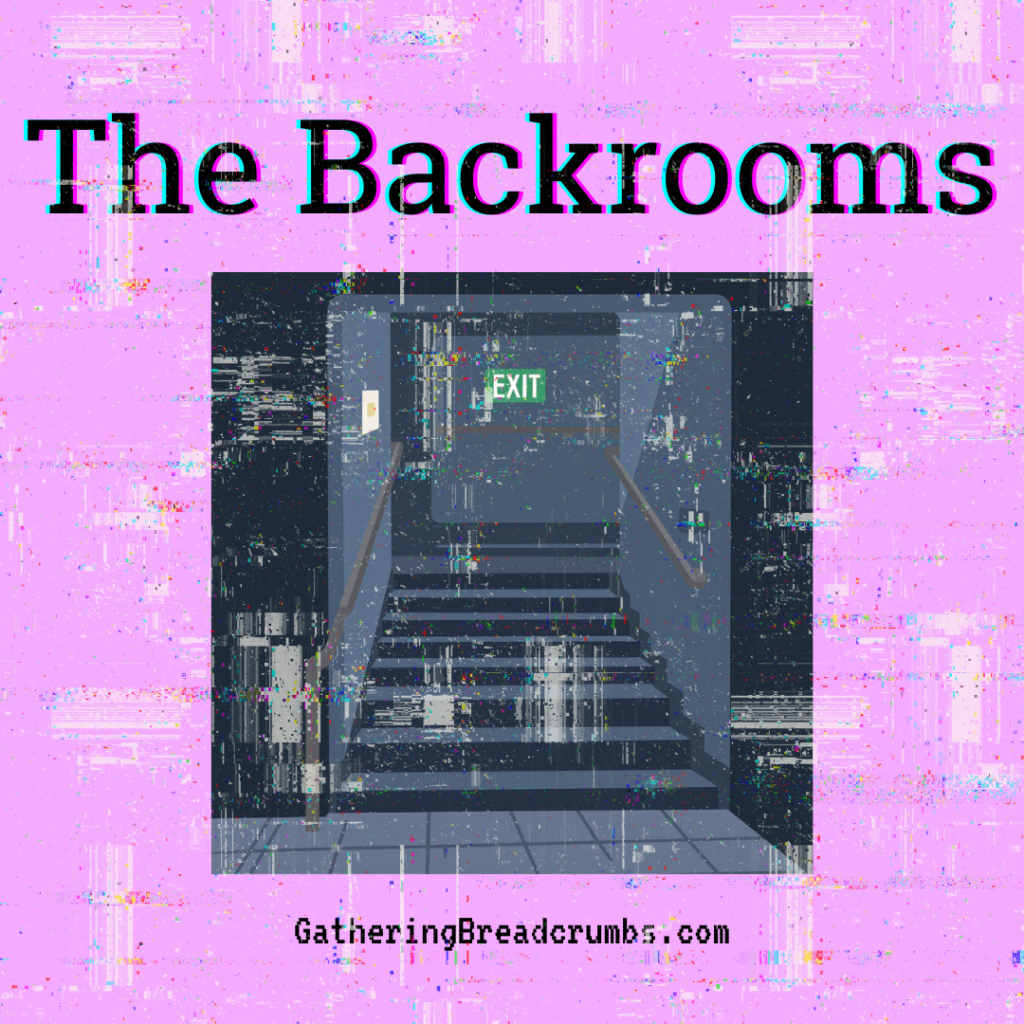
Title: The Backrooms
Alternate Names / Local Labels: The Backrooms · True Backrooms · Liminal Spaces · Noclip Reality
Location: Internet origin (4chan); conceptualized globally through digital folklore, gaming communities, Reddit, YouTube, and collaborative fiction
Date(s) of Activity: Originated May 13, 2019; ongoing cultural expansion through present
Archive Category: Fairytales & Folklore
Status: Active / Evolving Internet Folklore
CONTENT NOTICE
This entry references themes of isolation, paranoia, existential anxiety, and unsettling environments. Descriptions are non-graphic.
SUMMARY
The Backrooms are a modern internet-born folklore phenomenon centered on the idea of accidentally “noclipping” out of consensual reality and becoming trapped within an endless labyrinth of fluorescent-lit, yellow, decaying rooms.
Initially sparked by an anonymous 4chan post featuring an image of an empty, unsettling commercial interior, the Backrooms rapidly evolved into one of the internet’s most recognizable collaborative horror myths.
At its core, the Backrooms embody liminality: spaces caught between function and abandonment, nostalgia and dread, familiarity and wrongness. The phenomenon resonates deeply because it transforms mundane architectural spaces into psychological and folkloric thresholds.
Though later adaptations introduced monsters, levels, and survival systems, the original concept’s power lay in the terror of endless emptiness itself.
VERIFIED FACTS
● The Backrooms originated from a May 2019 post on 4chan’s /x/ paranormal board.
● The original image depicted a real commercial interior later identified as a HobbyTown store under renovation in Oshkosh, Wisconsin.
● The phrase “If you’re not careful and you noclip out of reality…” became foundational to the mythos.
● Reddit, YouTube creators, and online collaborative fiction communities rapidly expanded the concept.
● Kane Parsons (Kane Pixels) significantly popularized the Backrooms through cinematic analog horror adaptations.
● Competing communities emerged: some favored heavy lore expansion, while others sought to preserve the minimalist psychological horror of the original concept.
● The phenomenon is now considered a major example of internet-native folklore.
OPERATIONAL CONTEXT
The Backrooms occupy a unique intersection of:
● Internet collaborative storytelling
● Psychological horror
● Nostalgia studies
● Liminal architecture
● Meme evolution
● Digital folklore preservation
The concept functions similarly to traditional oral folklore by allowing communities to iteratively reshape and reinterpret the myth.
Much like older legends adapted to local anxieties, the Backrooms adapt to modern fears:
● Alienation
● Corporate sterility
● Endless monotony
● Disconnection from reality
● Fear of forgotten spaces
ANOMALOUS NOTES
Several elements contribute to the Backrooms’ unusual folkloric power:
● The setting is profoundly mundane rather than overtly supernatural.
● Fear emerges from atmosphere, scale, and uncertainty rather than explicit threat.
● Nostalgia often accompanies dread, producing conflicting emotional responses.
● The concept’s “noclip” terminology borrows from video game glitches, blending digital and physical unreality.
● Expansion into “levels” and entities parallels mythological systems of layered underworlds or labyrinths.
● The original concept’s ambiguity is often cited as more psychologically effective than later codified lore.
The Backrooms’ strongest folkloric function may be as an allegory for modern dislocation.
HUMAN FACTOR
● Anonymous internet users
● Reddit horror communities
● YouTube creators
● Analog horror filmmakers
● Meme historians
● Internet archivists
● Digital folklore researchers
Reactions vary widely:
● Fear
● Comfort
● Nostalgia
● Obsession
● Community-building
Its collaborative structure encourages participation rather than passive consumption.
CULTURAL / MATERIAL ARTIFACTS
● Original 4chan threads
● Reddit creepypasta posts
● Kane Pixels video series
● Backrooms Wiki archives
● Indie games
● Fan art and simulations
● Liminal photography communities
The Backrooms have transcended their origin to become a defining mythology of the early digital age.
THE CREATURE CLAIM
Unlike many folkloric systems, the Backrooms were initially compelling precisely because of their emptiness.
Original Form:
● Endless yellow rooms
● Fluorescent hum
● Damp carpeting
● No visible exits
● Psychological deterioration through isolation
Expanded Interpretations:
● Hostile entities
● Survival mechanics
● Multiple “levels”
● Alternate dimensions
● Government conspiracies
Many archivists and community members argue that excessive additions dilute the primal horror of the original myth.
FIELD IDENTIFICATION NOTES
If a space evokes:
– uncanny familiarity
– fluorescent overlighting
– architectural repetition
– unnatural emptiness
– sensory monotony
then it may align symbolically with Backrooms imagery.
If narratives include:
– accidental reality displacement
– “noclipping”
– endless wandering
– distorted corporate or domestic interiors
they likely derive directly from Backrooms folklore.
CROSS-REFERENCES
● Polybius (GB-0002): internet-era folklore with collaborative mythmaking origins
● Slender Man (GB-0017): internet-born entity shaped by collective participation
● Candle Cove (GB-0020): digital folklore blurring fiction, memory, and cultural belief
ARCHIVAL INTERPRETATION
The Backrooms represent one of humanity’s first truly large-scale native digital fairytales.
Where traditional labyrinth myths reflected fears of entrapment and monstrous pursuit, the Backrooms update these fears for the internet age: sterile corporate spaces, abandoned infrastructure, and infinite alienation.
Their popularity demonstrates that folklore remains alive, adapting fluidly to technology, architecture, and generational memory.
Rather than merely a creepypasta, the Backrooms are evidence that digital communities continue to create myth in real time.
This entry supports the interpretation that folklore does not vanish under modernity…it evolves with it.
BIBLIOGRAPHY / SOURCE NOTES
● “The Backrooms | Creepypasta Wiki | Fandom.”
● “The Backrooms.” Wikidot Backrooms Archive.
● Lloyd, Andrew. “The Backrooms: How a Creepy Office Photo Became an Internet Bogeyman.” Vice.
● Rogers, Reece. “How to ‘No-Clip’ Reality and Arrive in the Backrooms.” Wired.
● Pixels, Kane. “Kane Pixels.” YouTube.
● Royalty, Evan. “Into the Backrooms.” YouTube.
BREADCRUMBS
The archive invites further investigation into the following:
● Why do liminal spaces provoke both fear and nostalgia?
● How does collaborative internet storytelling compare to oral folklore traditions?
● What architectural features most commonly trigger “Backrooms” associations?
● Could the Backrooms be interpreted as a symbolic response to late capitalism and depersonalized modernity?
● How do different generations emotionally interpret liminal spaces?
● What role do ambiguity and minimalism play in successful digital folklore?
Readers, researchers, and digital witnesses are encouraged to document relevant liminal phenomena, archived discussions, or evolving iterations of this myth.
Archival Status: Filed
Last Updated: 05/12/2026
Archivist Initials: EH