Entry ID: GB-0015
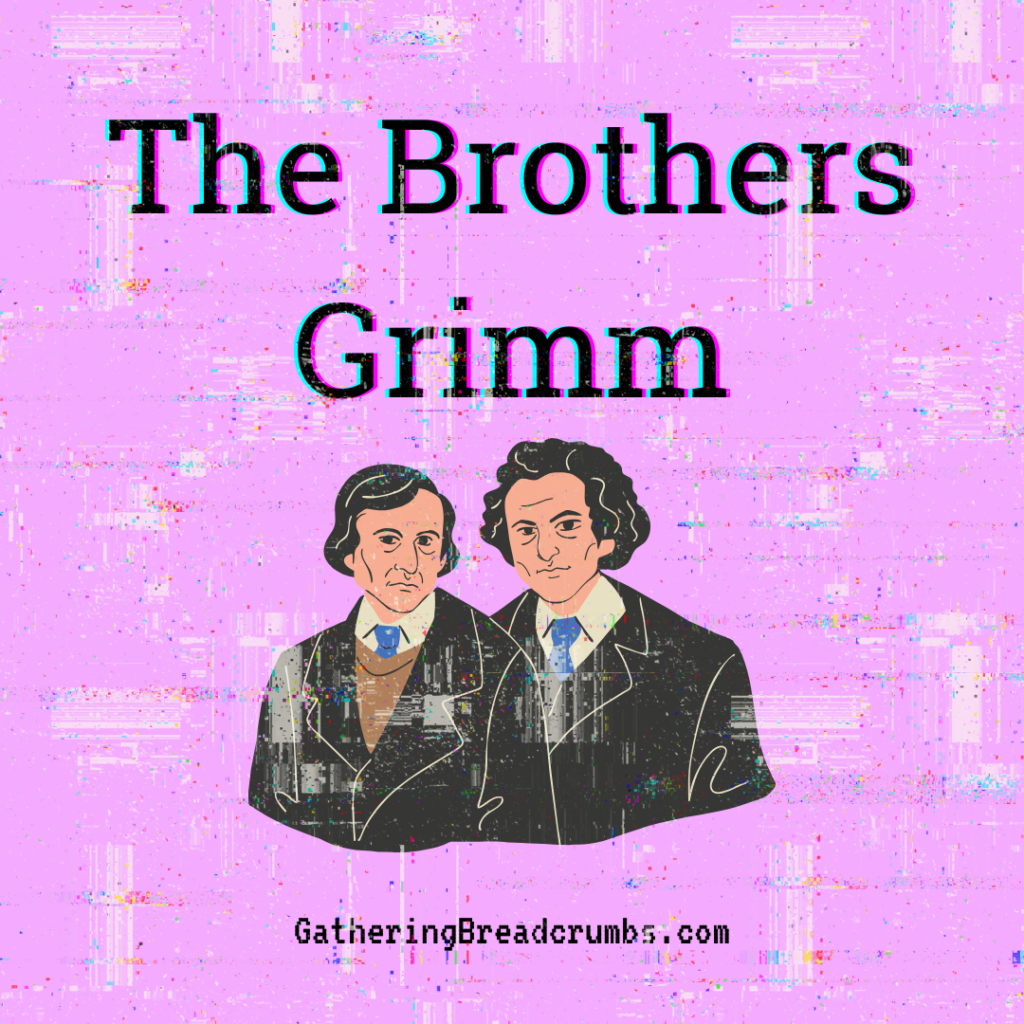
Title: The Brothers Grimm
Alternate Names / Local Labels: Jacob and Wilhelm Grimm · Die Brüder Grimm
Location: German States (primarily Hesse-Kassel, Göttingen, Berlin)
Date(s) of Activity: 1800–1863 (primary period of scholarship and publication)
Archive Category: Historical Figures
Status: Verified Historical Figures / Cultural Catalysts
CONTENT NOTICE
This entry references themes of death, poverty, political suppression, and the editorial alteration of traditional folklore.
SUMMARY
The Brothers Grimm—Jacob Grimm (1785–1863) and Wilhelm Grimm (1786–1859)—were German scholars, linguists, and cultural preservationists whose work fundamentally shaped modern understandings of folklore.
They are most widely known for their collection Kinder- und Hausmärchen (1812–1857), later known in English as Grimm’s Fairy Tales. While often perceived as simple children’s stories, these works represent a complex synthesis of oral traditions, literary adaptation, and scholarly interpretation.
Contrary to popular belief, the brothers did not primarily gather tales from rural peasants. The majority of their material was sourced from educated, often urban women, and subsequently edited—sometimes heavily—by the Grimms themselves.
Beyond folklore, both brothers were deeply engaged in linguistics, legal history, and cultural scholarship. Jacob Grimm, in particular, is noted for formulating Grimm’s Law, a foundational principle in the study of Indo-European linguistics.
Their work reflects a deliberate effort to preserve cultural identity during a period of political instability and transformation within the German states.
VERIFIED FACTS
• Jacob and Wilhelm Grimm were born in Hanau, Germany, the eldest of five siblings.
• Their father, a Calvinist minister, died in 1796, leaving the family in financial hardship. Their mother died in 1808, after which Jacob assumed responsibility for the family.
• Both brothers studied law at the University of Marburg (1802–1806), where they were influenced by Romantic and nationalist scholars including Clemens Brentano, Friedrich Karl von Savigny, and Johann Gottfried von Herder.
• Their early exposure to Romanticism and antiquarian methods shaped their approach to folklore as a subject worthy of scholarly attention.
• Their first major collection, Kinder- und Hausmärchen, was published in two volumes (1812 and 1815), later expanded and revised multiple times.
• The work is now recognized by UNESCO’s Memory of the World Registry and remains one of the most widely translated literary collections globally.
• The brothers also published Deutsche Sagen (1816–1818), a collection of German legends, though it achieved less popular success.
• Jacob Grimm authored Deutsche Grammatik and Deutsche Rechtsaltertümer, contributing significantly to linguistic and legal history.
• Both brothers participated in the creation of the Deutsches Wörterbuch, an ambitious German dictionary project completed long after their deaths.
• In 1837, they were among the “Göttingen Seven,” a group of professors dismissed for protesting the repeal of the Hanoverian constitution.
• Later, they relocated to Berlin under the patronage of the Prussian king, continuing their scholarly work.
• Wilhelm married Dorothea Wild and had four children; Jacob remained unmarried and lived with his brother’s family.
• Both are buried in Berlin.
OPERATIONAL CONTEXT
The Grimms’ work emerged during a period of cultural consolidation and rising nationalism in early 19th-century Germany.
Several contextual factors shaped their output:
• Romanticism: A movement emphasizing emotion, tradition, and the cultural significance of the past.
• Political Fragmentation: The German states lacked unification, encouraging efforts to define a shared cultural identity.
• Oral Tradition Decline: Industrialization and social change threatened the survival of traditional storytelling practices.
• Academic Resistance: The brothers actively opposed censorship and advocated for intellectual freedom.
Their work may be understood as both preservation and reconstruction—an attempt to capture something already slipping away.
ANOMALOUS NOTES
While historically grounded, several aspects of the Grimms’ work complicate their legacy:
• The common belief that they transcribed tales directly from rural storytellers is largely inaccurate.
• Many stories were significantly edited to align with moral, cultural, or literary expectations.
• Later editions of their tales became progressively sanitized, particularly for younger audiences.
• The distinction between “authentic folklore” and “constructed narrative” is often blurred in their collections.
There is, perhaps, something quietly unsettling in this—stories remembered not as they were, but as they were shaped to be remembered.
HUMAN FACTOR
Key individuals and influences include:
• Jacob Grimm – Linguist, legal historian, methodical and reserved
• Wilhelm Grimm – Editor, stylist, more socially inclined and artistically focused
• Clemens Brentano – Catalyst for their early folklore collection efforts
• Achim von Arnim – Encouraged independent publication
• Johann Gottfried von Herder – Philosophical influence on the value of folk culture
The brothers’ partnership reflects a synthesis of analytical rigor and narrative sensitivity.
CULTURAL / MATERIAL ARTIFACTS
The Grimms’ influence permeates global culture.
Notable outputs include:
Literary Works
• Kinder- und Hausmärchen (Grimm’s Fairy Tales)
• Deutsche Sagen
• Deutsches Wörterbuch
Enduring Tales (Selected)
• Cinderella
• Snow White
• Hansel and Gretel
• Rapunzel
• Rumpelstiltskin
Their work has inspired countless adaptations across literature, film, and academic study.
THE FIGURE CLAIM
(Operational Claim Variant: Cultural Architects)
If treated as archival entities rather than purely historical figures, the Brothers Grimm may be understood as:
• Preservers of narrative memory
• Editors of cultural identity
• Mediators between oral tradition and written form
• Agents influencing the survival—and transformation—of folklore
Their “anomalous” quality lies not in supernatural ability, but in their profound and lasting alteration of how stories persist.
CROSS-REFERENCES
• GB-0002: Polybius (Modern Folklore / Cultural Construction)
ARCHIVAL INTERPRETATION
The Brothers Grimm occupy a liminal space between historian and creator.
They did not merely record folklore—they stabilized it. Defined it. In some cases, reshaped it into forms that would endure beyond the fragile chain of oral transmission.
This raises an uncomfortable but necessary question:
At what point does preservation become authorship?
And more importantly… what is lost when stories are made permanent?
BIBLIOGRAPHY / SOURCE NOTES
The following sources informed this entry and are preserved for verification, further research, and contextual grounding:• Denecke, Ludwig. “Brothers Grimm | Books, Fairy Tales, Cinderella, Stories, & Works | Britannica.” Encyclopaedia Britannica, 17 Dec. 2025.
• Puscher, Blake. “Understanding the Brothers Grimm Beyond Princesses and Magic.” Colorado Arts and Sciences Magazine, University of Colorado Boulder, 7 Apr. 2024.
• Stuart, MacKenzie. “The True Story of the Brothers Grimm.” Explore the Archive, Yale University Press, 16 Dec. 2024.
• Zipes, Jack, et al. “How the Grimm Brothers Saved the Fairy Tale.” National Endowment for the Humanities, Mar. 2015.
BREADCRUMBS
Further lines of inquiry are encouraged:
• How did editorial changes across editions alter the tone and meaning of specific tales?
• To what extent did the Grimms influence modern concepts of childhood through their revisions?
• Are there identifiable “original” versions of key tales, or only evolving variants?
• What cultural elements were emphasized—or suppressed—in their collections?
• How might folklore have developed differently without their intervention?
Archival Status: Filed
Last Updated: 03/21/2026
Archivist Initials: EH